
Cupping Therapy in Forest Grove
WORKED INTO A SESSION · 60 MIN BODY MASSAGE · $80
Private rooms Open every day, 9 AM – 8 PM Walk-ins welcome
Forest Grove, OR 97116
At a glance
- What it is
- Suction cups that pull tissue up and away from the muscle underneath, instead of pressing down into it.
- How it is booked
- Inside a body massage, not as its own service. A 60-minute body massage is $80.
- On the menu
- There is no cupping line. Five services are published, and cupping is a technique used within them.
- The marks
- Round, dark, painless, and they last days. Read the second section before booking near an event.
- Where on the body
- Usually the upper back, shoulders and the sides of the spine. Not on the face, not over bone.
- How long it takes
- A few minutes of the session, not the whole thing. Fixed cups sit for a short spell; gliding cups keep moving.
- Ask ahead
- Say cupping when you call. Walk-ins are welcome daily, but this depends on which therapist is on shift.
- Hours
- Every day, 9 AM to 8 PM. There is no closed day.
- Where
- 1911 Mountain View Ln #300, at 19th Avenue and Mountain View Lane, with a free lot at the door.
The mechanics
Cupping therapy is the opposite of everything else we do — it lifts
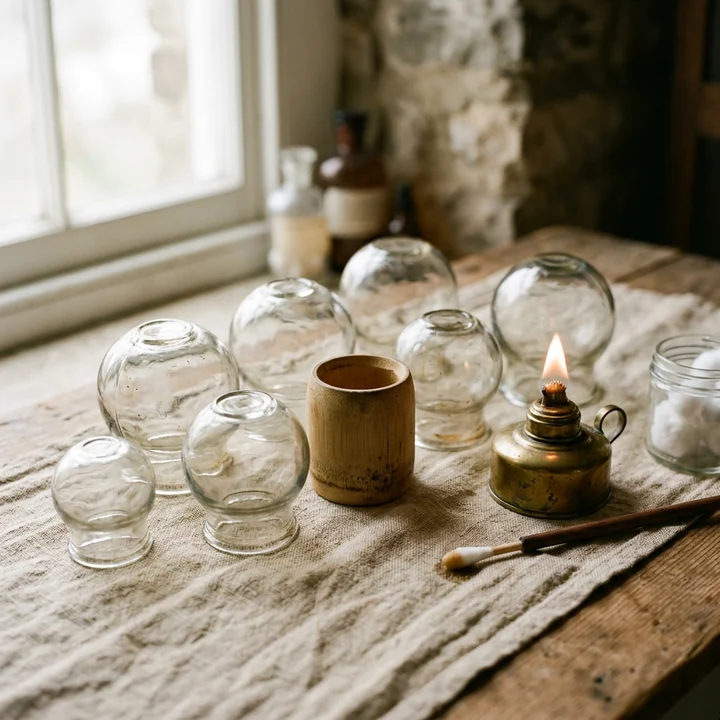
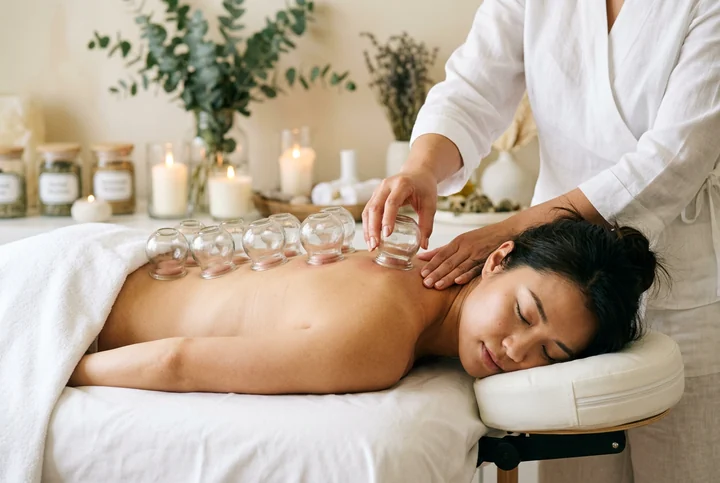
Every technique in a massage room applies force in the same direction. A thumb presses down. A forearm presses down. A heated stone presses down. Cupping therapy is the one exception on the whole menu: a cup is placed on oiled skin, air is drawn out of it, and the vacuum pulls the skin and the soft tissue underneath it upward, away from the muscle. Nothing is pushed. The tissue is lifted and held there.
That inversion is the entire idea, and it is the reason cupping therapy feels unfamiliar to people who have had a hundred massages. There is no pain in the way a deep-tissue elbow can be painful. There is a strong tugging sensation, a warmth, and a distinct feeling of skin being pulled away from what is under it. Most people describe it as strange for the first ten seconds and then unremarkable for the rest of the time the cup is on.
Two different things go by the name cupping. Dry cupping is suction on intact skin and nothing else — no cut, nothing drawn out, nothing broken. Wet cupping involves deliberately scoring the skin and is a clinical procedure that has no place in a massage studio. What happens in a session here is the dry kind, worked into a body massage alongside hands-on work, and that distinction is worth knowing before you read anything else about cupping online.
| Technique | Direction of force | What it feels like |
|---|---|---|
| Cupping | Pulls tissue upward | Tugging, warm, oddly hollow. No sharp edge to it. |
| Deep tissue | Presses downward and slowly | Firm, sometimes tender, working through layers. |
| Swedish | Presses downward and glides | Long, even, unhurried strokes at a light-to-medium pressure. |
| Hot stone | Presses downward with heat | Heavy warmth that softens tissue before hands do the work. |
Read this first
The marks are real, they are not bruises, and they last
Cupping leaves circles. They are round, they are usually somewhere between pink and a deep purple-gray, and they sit exactly where each cup was. They appear within minutes and they do not wash off. This is the single most important thing to know before booking cupping therapy, and it is the thing people are most often not told: the marks outlast the appointment by days.
They are not bruises in the impact sense. A bruise is what happens when something strikes tissue and breaks vessels by force. A cupping mark is the result of suction drawing blood toward the surface, so the discoloration arrives without any blow being landed. The practical difference is that a cupping mark is generally painless — it does not throb, it is not tender to touch the next morning, and it does not hurt when you lean back against a chair. It simply looks dramatic.
How long they take to fade varies by person and by how much suction was used. Cleveland Clinic's overview of cupping puts the usual range at several days up to a couple of weeks. The planning advice is straightforward: if you have a wedding, a photo shoot, a beach weekend, a sleeveless dress or a medical appointment inside the next two weeks, book the cupping after it, not before.
| Cupping mark | Impact bruise | |
|---|---|---|
| Cause | Suction drawing blood toward the surface | Force striking tissue |
| Pain afterward | Usually none — it looks worse than it feels | Tender to touch, often for days |
| Shape | A clean circle, exactly where the cup sat | Irregular, spreading at the edges |
| Typical duration | Several days, sometimes up to two weeks | Varies with severity |
How it is booked
Cupping is part of a session, not a session by itself
There are five services on our price list and cupping therapy is not one of them. Cupping takes a few minutes of a session, not the whole hour, so pricing it on its own would mean selling you a very short appointment or padding one out to fill the time. So you book a body massage and you say that cupping is what you want, and the therapist builds the session around it.
Which means the price is simply the price of the session you booked. A 45-minute body massage is $70, an hour is $80, and ninety minutes is $120. Every one of those figures is published on our menu, they are the same by card or cash, and there is no cupping surcharge waiting at the counter. This studio does not run add-on pricing, membership rates or therapist tiers, and the number you saw before you walked in is the number you pay.
An hour is the sensible length for a first cupping appointment. Cups take a little setup, the therapist wants time to work the area by hand both before and after, and squeezing that into 45 minutes means something gets cut short. If cupping is going into a session alongside real depth of work — the deep tissue end of the spectrum rather than the relaxing end — ninety minutes stops the hour feeling like a race.
Booking cupping, in order
- Look at the next two weeks first. The marks last days, so book after the event.
- Choose a length. An hour is the sensible first cupping appointment; ninety minutes if real depth of work is going in alongside it.
- Book it as a body massage. There is no cupping line on the price list to pick instead.
- Say cupping when you call, or put it in the notes if you book online, so the therapist can plan the session around it.
- Tell the therapist when you arrive whether you have had cupping before and how you marked.
- Pay the price of the session you booked — no cupping surcharge, and the same by card or cash.
Fixed cups and gliding cups
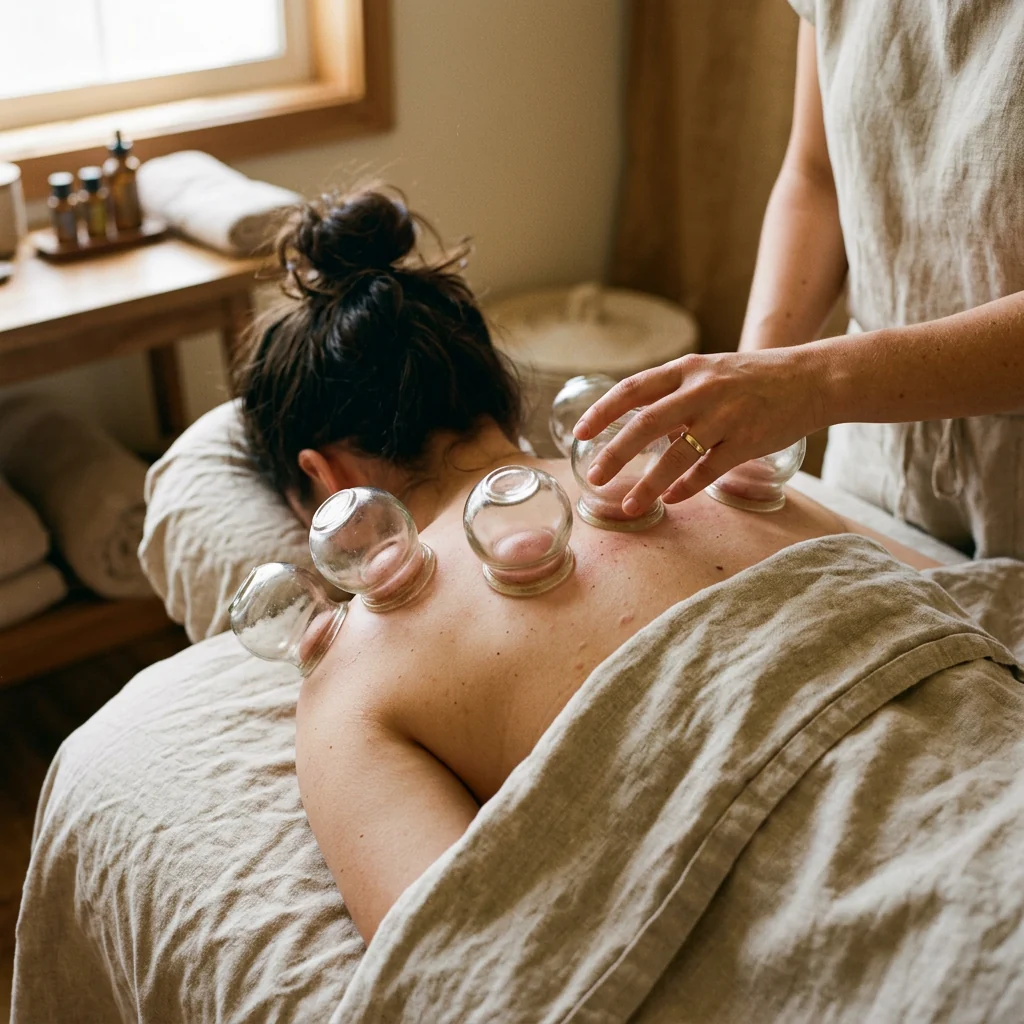
Cups can either stay put or move. Fixed cups are set down over a tight area and left in place for a short spell while the suction does its work, and those are the ones that leave the clearest circles. Gliding cups are drawn slowly across oiled skin, usually along the sides of the spine or across the top of the shoulders, and they behave much more like a massage stroke that pulls instead of pushes.
Gliding work generally leaves lighter, streakier marks than fixed cups, and it is the better starting point if you are curious about cupping therapy but nervous about how you will look on Monday. Say that when you arrive. It is a normal request and it changes how the therapist works, not whether they are willing to.
Where on the body the cups go
The upper back, the shoulders and the muscle running either side of the spine take cups well, because there is enough soft tissue there for suction to lift. So do the sides of the low back and, less often, the backs of the thighs and calves. Cups need a flat area with muscle under it, which rules out most of the rest of you.
Cups do not go on the face, over the spine itself, over bone with no padding, or on broken, irritated or sunburned skin. If you are unsure whether a particular area is suitable, ask before the session starts, not during it — this is the sort of thing therapists would far rather discuss with their hands still clean.
Evidence
What the research says, stated plainly
NCCIH's page on cupping does not endorse it. The National Center for Complementary and Integrative Health describes the research base as limited and the studies that exist as generally of low quality, with results that do not support firm conclusions about cupping for any specific health condition. We are linking that page on a page selling cupping, because you are going to find it anyway and it is better that you find it here.
The historical context is old. Cupping has been used for centuries in several traditions, and it reaches most American massage rooms through traditional Chinese medicine, where it sits alongside acupressure and tui na. Longevity is not evidence, and we are not going to present it as such. It does explain why the technique is described in the language of energy and stagnation in a lot of what you will read, and why we deliberately do not describe it that way here.
So the claim we will make is small and it is the only one we will make: cupping therapy feels distinct from anything else in the room, a lot of people like how their upper back feels for a few days afterward, and it leaves marks. It does not detoxify anything, it does not treat illness, and it is not a substitute for care from a doctor. If something hurts in a way that is new, severe, or getting worse, that is a medical question and a massage studio is the wrong first stop.
Before you book
Who should wait, and who should ask a doctor first
Most healthy adults tolerate cupping without incident, and the reason to hesitate is usually timing, not safety. The marks are the main planning problem, and they are entirely predictable: you know within an hour of the session what your back is going to look like for the next week. So the question to ask yourself is not really about cupping therapy at all — it is whether the next fortnight contains anything that involves your shoulders being seen.
There are also people for whom this is a conversation with a physician, not with us. Anyone taking a blood thinner, anyone with a bleeding or clotting condition, anyone with a skin condition affecting the area, and anyone whose skin is fragile or currently healing should ask their own doctor before booking cupping therapy anywhere. We are a wellness studio, not a medical provider, and that question is genuinely outside what we can answer for you.
Pregnancy is its own case. Cupping is not part of the prenatal work done here — prenatal massage is side-lying, supported, and built around comfort in the second and third trimesters. If you are pregnant and interested in cupping, raise it with your doctor first, and tell your therapist you are pregnant regardless of what you book. It changes positioning and pressure whether or not cups are involved.
- Wear or bring something that covers your upper back if you are going straight to work, dinner or the gym afterward.
- Skip the sauna, the hot tub and a long hot shower for the rest of the day. Warm skin marks more readily.
- Expect the marked area to feel slightly tender to firm pressure for a day, and to feel loose rather than sore.
- Tell the therapist if you have had cupping before and how you marked. It is the most useful single piece of information you can give.
- If you want the warmth without the marks, hot stone work is the technique to ask for instead — it leaves nothing behind at all.
Forest Grove
Finding cupping therapy in Forest Grove
We are at 1911 Mountain View Ln #300, on the corner of 19th Avenue and Mountain View Lane, roughly six hundred feet south of Pacific Avenue — which is OR-8, the TV Highway, where it runs through town. The building is a shared professional block with a dental office, a counseling practice, an orthodontist and a chiropractor in it, so there is a real lot with real space in it. Parking is free. No meters, no garage, nothing to validate.
We are open every day from 9 AM to 8 PM, Sunday included, and we take walk-ins. Cupping is the one thing worth phoning about first, though, because it is a technique, not a room, and it depends on which therapist is on shift when you arrive. Call (503) 381-5657 and it takes under a minute, or book online at any hour and mention cupping in the notes.
Cupping therapy is not easy to find on this side of Washington County. We are the last commercial block of Forest Grove before the Cornelius line, which puts us on the near side of town for anyone driving in from Cornelius or further east along the highway. The TriMet stop at the top of the block is named Pacific Avenue & Mountain View Lane, and Line 57 runs that corridor seven days a week. Anything else you want to know before booking is probably answered on our FAQ page.
Everything else in this room pushes down. Cupping pulls up. That one inversion is most of what there is to explain.
A look at the work
Good questions, straight answers
How much does cupping therapy cost in Forest Grove?
Do the cupping marks hurt?
How long do cupping marks last?
Does cupping therapy work?
Can I get cupping as a walk-in?
Where on my body will the cups go?
Is this wet cupping?
Can I have cupping while pregnant?
Research & references
Stress, sleep and mind-body research we point guests to:
- NCCIH — Stress
- NCCIH — Relaxation Techniques: What You Need To Know
- NCCIH — Sleep Disorders and Complementary Health Approaches
- NCCIH — Mind and Body Practices
All of these are free to read and take about ten minutes each.
Massage in Oregon is state-regulated, and every practicing therapist must be licensed: the Oregon State Board of Massage Therapists requires 625 hours of training, a board-approved national exam plus an Oregon law exam, current Basic Life Support certification, and 25 hours of continuing education every two-year renewal — and it requires the studio itself to hold a Board-issued facility permit. Any licensed Oregon therapist or permitted studio can be verified for free on the Board's public lookup.
West Valley Massage is a relaxation and wellness studio, not a medical provider. Massage supports relaxation and general well-being; it does not diagnose or treat medical conditions. Talk with your doctor about pain that is new, severe, or not improving.
Walk out lighter than you walked in.
West Valley Massage · 1911 Mountain View Ln #300, Forest Grove, OR 97116 · Open daily, 9:00 AM – 8:00 PM